Pied Pipers and IDE

On a recent trip to Ethiopia, one of my colleagues collected a couple of photos of himself with a larger group of the local kids.  I was ragging him a little about that saying that IDE doesn’t need any more images of “white men saving the world’s poor children.”  I had to partially eat my words when I came across my own Pied Piper pose from a trip to Bangladesh in September.  We were visiting project areas in northern Bangladesh; as visitors we may have been curious about irrigation applications, but for the kids in the village, the sight of a somewhat larger, white mustached foreigner with a black cap was also somewhat curious.  It was not long before there was a procession of 20 or more following me.  They were cute and they were interested in what this was all about.  They happily agreed to pose for a photo; believe me, when I showed them the photo, they were more interested in seeing themselves than the “ferenghi”.

I have always enjoyed little kids, and somewhere along the way, people started to call me “Uncle Al, the kiddies’ pal.”  Now, I’m not so big on my nephews and nieces (and I have about 30 of these) calling me “uncle”, but I do like the warmth and friendship dimension of this.  (I’m glad that a bunch of them are now my Facebook friends). 

These days I have two little grandsons who mean the world to me, and I am proud to be called their “grandpa”.  I love their curiosity, their lack of pretension, their love of running, their hugs and smiles, and their enjoyment of good books.  On my bucket list was the desire to take a grandchild to the zoo; they have allowed me to realize the fulfillment of this dream.  Although they are challenging at times, fundamentally I do not see Matias and Lucas as problem cases which their great white grandfather needs to solve.  What I resonate with is their own potential, hopes, dreams, energies & curiosities.  Good health, literacy, a secure & peaceful environment and enough of the right food to eat would certainly be helpful.

Fundamentally, these are the same thoughts I have about the “gang” to whom I became an unwitting Pied Piper in Bangladesh.  Their standard of living was basic to be sure, but it was not hard to see that they were also interested in books, in having enough to eat, in being able to run and in being safe & secure.  In other words, their interests (whether explicitly addressed or not) were essentially the same as those of my little Canadian grandsons. 

Neither my colleague nor I are interested in a paternalistic view of development.  Both of us enjoy kids, however, and if IDE’s income generating programs create opportunities for regular delicious meals, for reading, for running, for fun and for friendship, that turns us on.  It’s not about being uncles or grandfathers or Pied Pipers – it is just about friendship and generosity.
Posted in IDE, Personal | Tagged , | 3 Comments

UnBalanced Investing

It’s already few years back, but those finance lessons from my MBA are still stuck in my head.  (1)  The right way to value a business is to calculate the net present value of future cash flows.  (2) The safest (least risky) investment portfolio is one which combines fixed income securities (bonds) with equity positions (stock).  (3) It’s tough to beat the market in the long run.  (4)  Mutual funds offer the convenience of various investment profiles without the need for daily personal management.  (5)  Diversity is essential.  Is this how Warren Buffet became so wealthy?

So now we’re getting to the end of the year, and some of us are started to review just how well we did with our personal investments in the past year.  How much of the lost ground from the financial meltdown have we managed to recover?  What’s been my return on investment (ROI) this year?  How many years do I have to work before I can retire?

Investment considerations are also important for IDE.  No, we aren’t taking any risks with our donor funds, but at a certain profound level, we have come to realize that IDE is smack dab in the middle of a community of investors.  If the first case, the farmer customers who purchase our irrigation technologies are fundamentally investors in their farms, families and futures.  If they invest $100 in a drip system, they are calculating that they will receive a ROI several factors greater than their purchase. 

Likewise our donors, for example, the Gates Foundation, is very interested in the social return on their investment with IDE.  They calculate their cost per customer as donors, and are strongly interested in seeing a substantial return.  We are happy to report that many of our projects generate a return of 8 to 10 times when taken over a three year period.

So this adds a dimension to my personal portfolio management.  Without a doubt, I want to be saving and investing for my personal future.  At another level, however, I also have a profound sense that I live in a global community.  In this global community, we are all more secure if all members of that community are doing well.  An “investment” in Zambian and Ethiopian farm families, and a host of other places simply makes the world a more secure place for all of us.  An improving ROI for Indian smallholders is good for all of us.

In the past year, IDE developed five social innovation funds to be used as donor vehicles for those interested in unbundled investing.  Our Bottom of the Pyramid Enterprise Fund is designed to stimulate the sustainable creation of supply chains which use market mechanisms to distribute value rich irrigation technologies.  Our Innovation Fund will invest in the development of new productive technologies to increase food production, hence income.  Our Women in Agriculture Fund recognizes that in many parts of the world female farmers are really the group that does the majority of the work.  Our Rural Finance Fund is designed to provide the credit necessary to make those investments in irrigation and other productive technologies.  Finally, our Leadership Fund is based on the common sense idea that organizations and field programs like IDE are only as good as the quality of the leadership and management behind them. 

The contention of this blog comment is that if my investments are restricted only to my personal future, that is an unbalanced approach to investment.  On the other hand, if I invest in both my future and the future of dollar a day farmers in developing countries, that is balanced.  I am interested in both.

We offer you no advice about your personal savings investments, but we do urge you to consider the five social innovation funds outlined above.  We believe you will like the SROI (social return on investment). Consider it an enlightened approach to balanced investment.

Al Doerksen – December 2010

Posted in IDE | 1 Comment

Intentional Consumption

So we’re back in that period of the year when we begin to hear angst around the pressure to consume.  So here are my somewhat contrarian guidelines first written a couple of years ago.  This is an argument for consumption mixed with a measure of thought and intelligence. 

Don’t fall into the trap of anti-consumerism.  Ask yourself how many people you would like to disemploy this season by failing to engage in the trade and commerce that makes the world go around.  Job creation only works if there are willing customers. 

Live broader than the confines of the 100 mile diet.  Enjoy a cup of coffee or a bowl of raspberries or a banana or an orange and other food which has travelled some distance knowing that producers, processors and transporters have as much right to work and to earn an income as we do.  Remember that we live in a global community in which we trade and barter and work in our areas of comparative advantage.  It is good to support local producers but do not fall into the trap of neo-protectionism which excludes distant producers from our markets.  

Fair trade is a good thing but it too only works if people consume.  “Middle men” do play a useful purpose in the value chain which connects producers to markets.  Fair trade works to ensure that those portions of the value chain which have the least economic power are also treated fairly.  So buying fair trade coffee or cocoa or clothing is useful.  Do insist on comparable quality however…. and do insist that large sourcers from developing countries employ fair labour practises wherever they are. 

Buy something local but also buy something from China or India or some other developing economy.  Recently I read an article by a family that has been “China-free” for a year.  This is repugnant.  As already noted, we need to start acting as though we live in a global community, and we need to celebrate the increasing prosperity being experienced in Mexico, China & India thanks to the globalization.

 Buy something extravagant like an original work of art or a handmade carpet.  Often the producers of these are hardworking and receive a relatively low net hourly wage,  nevertheless, they are people of unusual skill, creativity and insight.  Our world needs these influences and contributions if we want to be more than mere material consumers of daily needs.

Happily pay higher prices for organic food.  Organic foods are healthier for you but are more expensive to grow, and those who produce them require a fair return on their efforts to stay in business.  Increasing demand will incentify the drive to find greater efficiencies in organic food production.  At the same time, recognize that organic foods are a luxury that mostly only the rich world can afford – much of the world lives on what they can get.

Pay above the market for something.  A few weeks ago I had my shoes shined by a shoe shine wallah in India.  The going rate is 5 rupees (about 12 cents); he asked for 10 rupees.  I gave him 50 rupees and walked away.  It cost me a dollar to surprise him, to usefully interfere in the local market and to shorten the number of hours he had to work to feed himself and his family.  There are other ways to “over pay”.  An unusually large tip (say 20%) for good service would be a nice surprise.  Deciding to purchase from a small trying-to-survive independent retailer as opposed to a lower priced big box store might be a good thing.

Buy some new piece of technology.  Digital film cameras are less expensive to operate and are easier on the environment than conventional film cameras.  Cell phones have democratized information for millions of poor people in developing economies, eg. India or China.  Ipods use a fraction of the energy of previous music machines.  Buying technology rewards the innovators and inventers of this world.  We need them.

Pay more for quality.  Cheapest is not always the best value.  Higher quality items frequently last longer and often have a lower cost per use.  They take longer to hit the landfill sites.  Buying quality encourages good engineering and careful craftsmanship.

When buying, look for items which contain a maximum of recyclable materials.  Pay more for containers or packaging which can be reused or recycled.  In general, leave plastic bags and other unnecessary packaging material at the store.  Bring your own reusable bags to the store.

Boycott boycotts.  The economic boycott of Cuba hasn’t worked.  Proposed boycotts of Myanmar (Burma) and Iran are not only politically ineffective, they mostly only punish the poor.  In a boycotted economy, the rich and powerful are inconvenienced perhaps but they will continue to eat.  It is people at the bottom end of the ladder that will pay the price.  If you have to boycott something, let it be the trade in small arms.

 Finally, a note of caution.  Consume only what you can afford.  Avoid the credit card trap.

Posted in Personal | Leave a comment

[Disruptive] Innovation

The thing about poverty is that people get trapped for generation after generation by expectations of same old same old.  “We are poor, we have always been poor and it is our destiny to be poor.  It is our caste.  It is our class.  It is our future.”

John Kenneth Galbraith wrote about this in “The Nature of Mass Poverty” first published in 1979.  He wondered why some groups had stayed poor for centuries. He found that many poor societies simply accommodate their poverty.  He found that many of the poor found it easier to accept the status quo than to contemplate an alternate better future. 

He used these observations of expectations also to explain why post World War II injections of Marshall Plan cash were so successful but why subsequent injections of foreign aid cash in developing countries have not always been successful.

In Galbraith’s experience, only a minority of the poor were able to imagine a better future and make the positive moves to get there.

Times have changed, to a degree, since the 1970’s.  More of the poor have received an education.  More than that, the widespread availability of television, cell phones and the internet, have allowed millions of even poor people develop new expectations, new visions and new hopes.

Innovation, if the right kind, can propel these hopes to reality.  We are speaking, in fact, of disrupting generations of hopelessness and misery, and creating the opportunities for changing the rules, changing the expectations, changing the measures, changing the outcomes, changing the future.  These technologies are rightfully named “disruptive technologies”.  They properly disrupt the expectation traps of the past and replace them with well-founded expectations of improved incomes and livelihoods along with accelerated hope and visions for the future.

Creating such “disruptive innovations” is both a privilege and our duty, especially if we believe that the poverty traps faced by too many millions is both reprehensible and unnecessary.  In some contexts, “revolution” is a negative experience.  At other times, it is entirely positive.  (It might depend on how many people get hurt!).  Likewise, some disruptions are also negative, but at other times, many disruptive innovations are nothing but positive, and we should embrace them.

I’m thinking of a smallholder farmer we just visited in Ziway.  His family had been poor for a long time.  Along came a disruptive innovation, a rope pump.  Not exactly intended for irrigation, it worked just fine anyway.  What came out of the pump wasn’t just water, however.  New hopes came pouring out.  Within months this farmer had increased his land under production/irrigation, and had acquired a diesel pump.  The rope pump had disrupted generations of despair, and had rewritten the future.  It made me proud to be with IDE.  It made me believe in the power of disruptive innovation.  Without apology.

Posted in IDE, Personal | Tagged , , | 1 Comment

The Water Malthusians

I grew up in a family with eight kids.  We never had a lot of money but I don’t recall thinking we were poor.  We did have water restrictions however.  We bathed once a week in 3 to 4 inches of shared water, and just urinating in the single toilet was not sufficient rationale to flush.  The driver for some of these family rules were not water scarcity –  it was a captive sewage system that had grossly inadequate absorptive capacity especially in our frozen Alberta winters.  Water consumption, however, was never an articulated concern in my growing up years; we added ice cubes and tea bags and instant coffee as often as we wished, and the hoses ran freely when flooding the community hockey rink.  In our local Mennonite church, water was a symbol of everlasting life and the medium of baptism.

Well, that was fifty years ago; now I enjoy my daily showers; I have graduated to double espressos and I no longer play ice hockey but I must confess that concerns about excessive flushing are still in my psyche.  In terms of its psycho-metaphorical value, water thoughts seem to generate more feelings of guilt than grace.

The water messages these days are not encouraging.  So many dire predictions from the water Malthusians.   Water tables are dropping.  The world is running out of fresh water.  We’ve got a time bomb.  Our water is getting more and more polluted with agricultural pesticide and herbicide run off, and industrial complexes still flush without abandon.  The next wars will allegedly be fought over access to water, and every double espresso I consume uses up 140 litres of water.  Eating beef is even worse – one kilo is like consuming 16,000 litres of water – enough water to fill the pool we no longer own.  I am part of the fortunate middle class world which owns a completely unsustainable water footprint – 2500 cubic meters per person per year.  One could drown in the statistics (and in the empty water bottles), and to change metaphors, all of this gives me a headache; I wish it was just the consequence of dehydration on a hot day.

My first water career was with Trojan Technologies, winner of the 2009 World Water Week Industry Award for its global leadership in the development of large scale ultraviolet water disinfection systems.  Our concerns were about safe (chlorine-free) drinking water, about safe discharges of waste water back into the environment, the removal and destruction of industrial contaminants in the ground water and river systems.  I was based in Europe; the EU Water Frameworks look at water from a river basis perspective.  The Rhine is used for agriculture, fisheries, industry, transportation, recreation and tourism and using its water must accommodate the interests of all.

My second water career is with IDE.  We encourage the productive use of water; in our experience irrigation is one of the best leverage opportunities available for smallplot dollar-a-day farmers.  We offer affordable technologies to pump/lift water, store water and distribute water.  The trouble with irrigation, however, is that is uses water – on average 6 litres per sq meter per day in irrigation season.   Some days this feels perverse; in a water stressed world, we are promoting the use of more of it.   We are not likely to be able to wean ourselves off food and water, however, so our focus, especially in agriculture, which uses 70% of available fresh water supplies will increasing promote the more careful stewardship of this resource.

Some 200 years ago, Malthus predicted that exponential increases in population would outstrip arithmetic increases in food supply, and that dire consequences would occur.  So far, he has been wrong, and to some extent, our ability with technology and innovation to grow more food has been a big part of the solution.  To some extent, these problem solving successes cause us to want to underestimate the challenges emerging.

For some water organizations, this emerging water stress is the imperative and rationale for fundraising.  “One billion people on the planet don’t have access to clean, safe drinking water. 2.6 billion people lack adequate sanitation, specifically a toilet.  But there is good news – by giving $20 you can provide one person with clean water for 20 years.”  

A less trite approach is found in the recently published IWMI report “Water for Food, Water for Life.”  While acknowledging the challenge faced, the report argues “The hope lies in closing the gap in agricultural productivity in many parts of the world … and in realizing the unexplored potential that lies in better water management along with non-miraculous changes in policy and production techniques. The world has enough freshwater to produce food for all its people over the next half century. But world leaders must take action now—before the opportunities to do so are lost.”

At IDE we will continue to pursue innovative approaches to more responsible use of productive water.  We want to use statistics responsibly.  So far it is not yet easily possible to destroy matter as so many of the water Malthusians seem to imply.  On the other hand, we will deepen our inquiries about falling water tables.

And I will continue to be conscious of my flushing habits.

Posted in IDE, Personal | Tagged , | 1 Comment

Homeless Artists

The first time I recall buying art from a homeless person was in Kenya some years ago.  The artist was a Somali women seeking safety in a UNHCR operated refugee camp.  Her surroundings were incredibly basic; her studio was her UNHCR tent, and her materials were found objects and local grasses and remnants of food aid bags.   The weaving she constructed was made by hand; there was no loom.  Today I wished I had asked her more questions.  Had she always been a weaver, an artist?  Why did she make these?  Did she really think there was a market for anything so crude?  Still, I bought the weaving, and have admired its underlying creativity and determination ever since, and had it hung between two plexiglass plates to give it due honor.

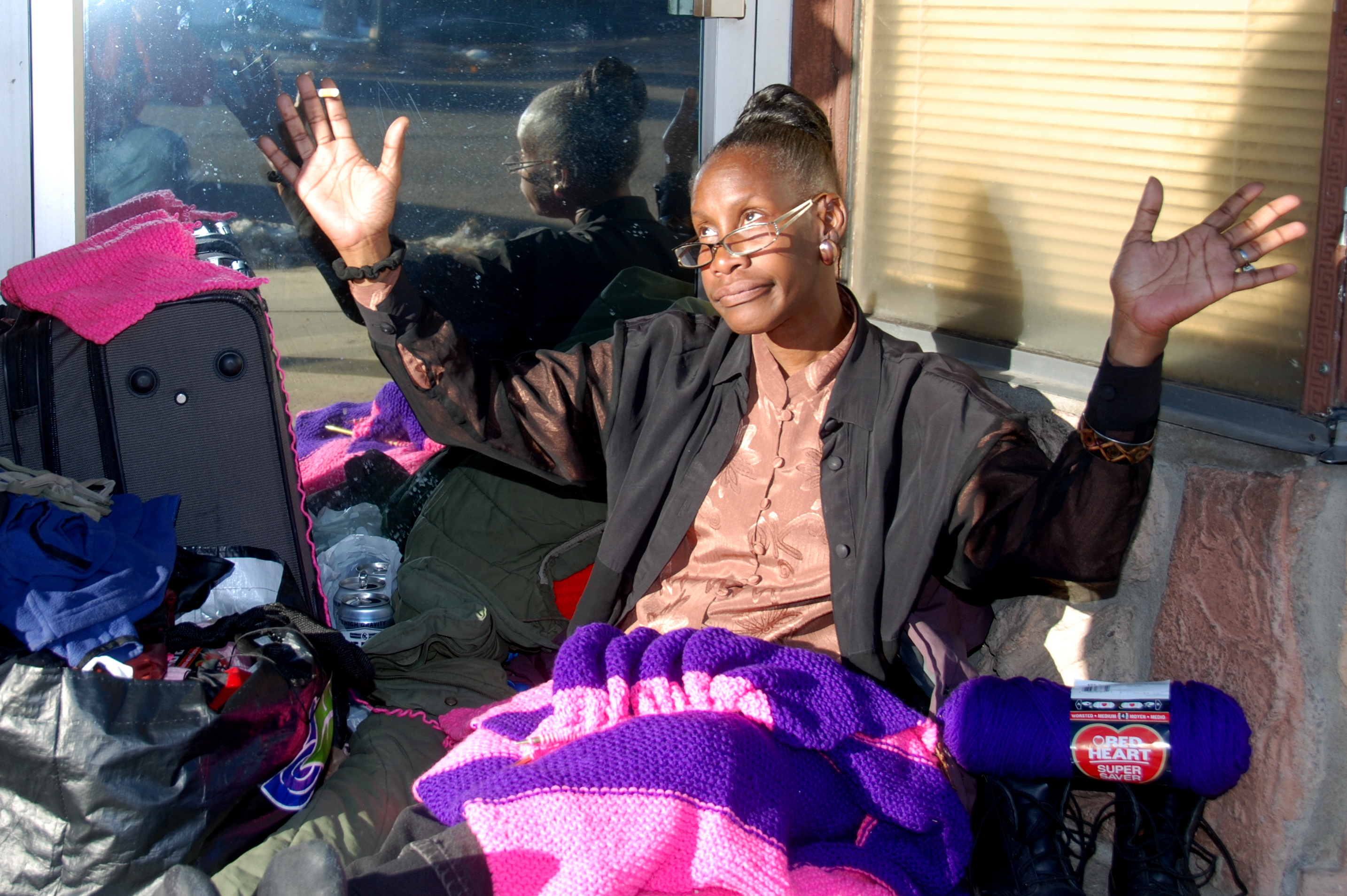
My second homeless artist lives on the street too, East Colfax – one the longest and most fascinating streets spanning Denver and surrounding cities.  Some might not call her an artist, just a crafts person since her medium is wool and her skill is knitting.  She claimed she had lived on the street for several years, I think partly by choice.  Any other place was too confining.  Once again, I bought a work of art – a red and black blanket perfect for that emergency blizzard storm.  I made the purchase less for the aesthetic value of the art than out of admiration for her entrepreneurial energy.

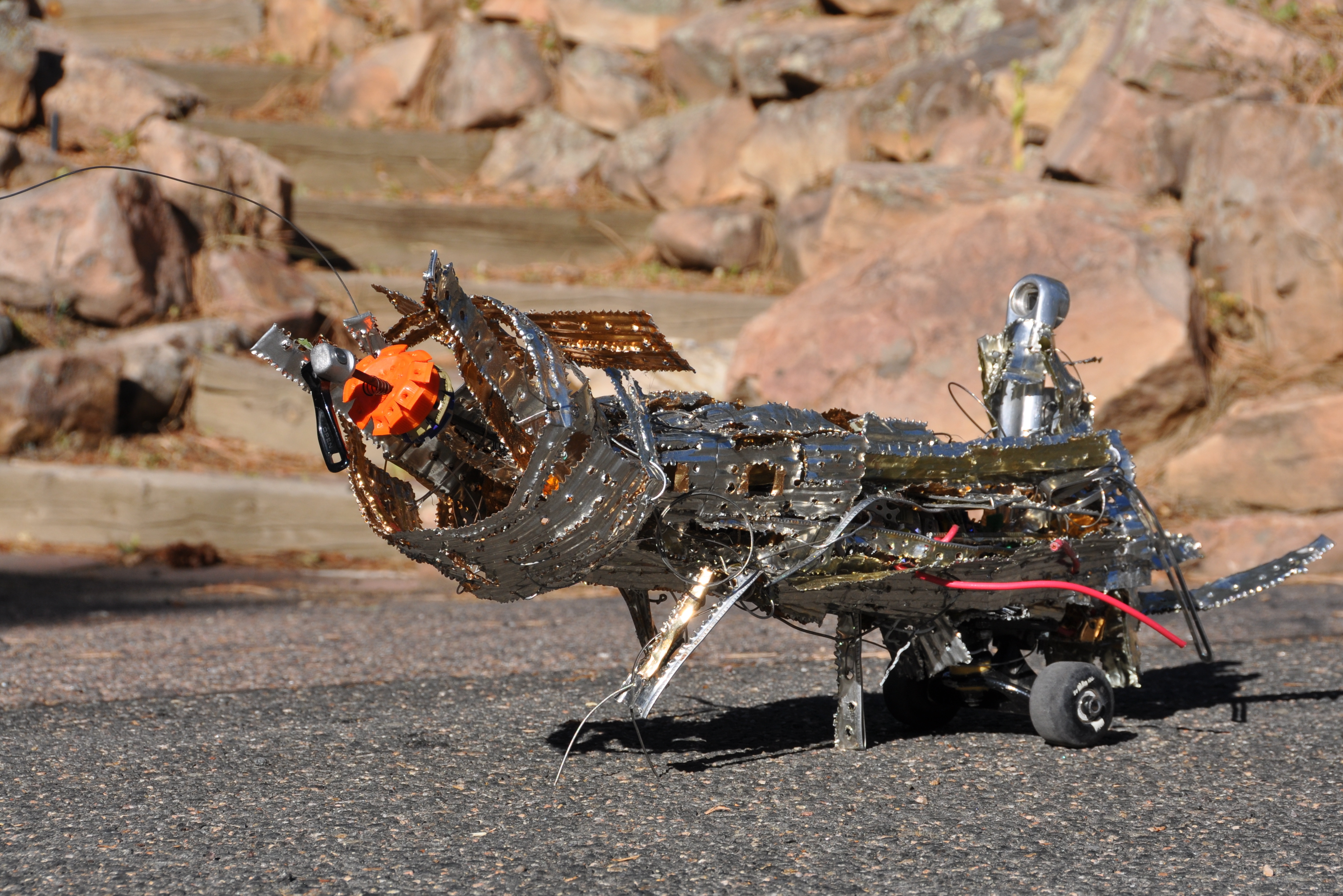
My most recent purchase was from a homeless (or so he claimed) person in Boulder just last Monday.  I spotted this thing on the sidewalk.  It looked like a mini semi-trailer at first.  Then it looked like it had morphed into a grasshopper.  It was definitely composed of all found materials – mostly aluminum cans cut apart and the edges serated.  Wires, some wrapped, and some stripped are used for the guts and the sensor aerials.  A faucet for some anterior feature.  A set of wheels which look like they come from a skate board.  My new artist friend had several other works on display too, but the one I saw first was the one I liked best.  He said he wanted $855 thousand and change for this work. I said I didn’t have $800k. He said, “you didn’t listen, I said $855,000”. He explained that this was a fair price because of all the creative input, the technical knowledge, the proprietary insights, etc.  I offered a $50 downpayment. He put his hand out and accepted, and then he gave me a calling card – a squashed and squared tin can.  His name was not on it but it was his sign. 

Why did I make the purchase?  Why throw away $50 on a collection of twisted indescribable metal and other found objects?   Several reasons actually.  In the first case, I admired the creativity and drive of these homeless artists.  Secondly, what good is it to believe in the power of markets to create opportunities if one refuses to get involved?  Artists need customers, and homeless customers need them more than anyone.   And finally, I thought they were good art pieces, and that is my choice to make.

Posted in IDE, Personal | 3 Comments

A sucker for markets

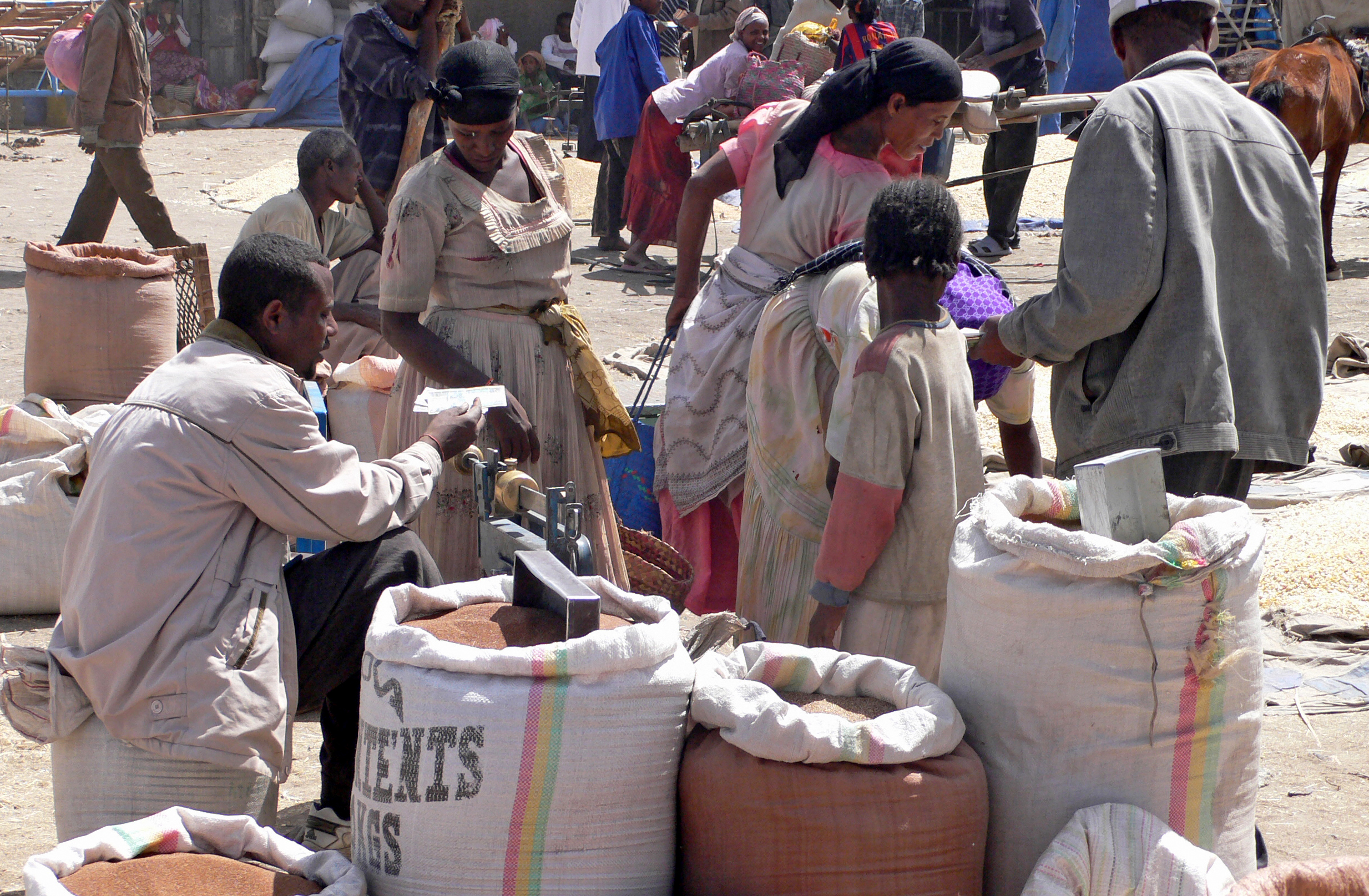
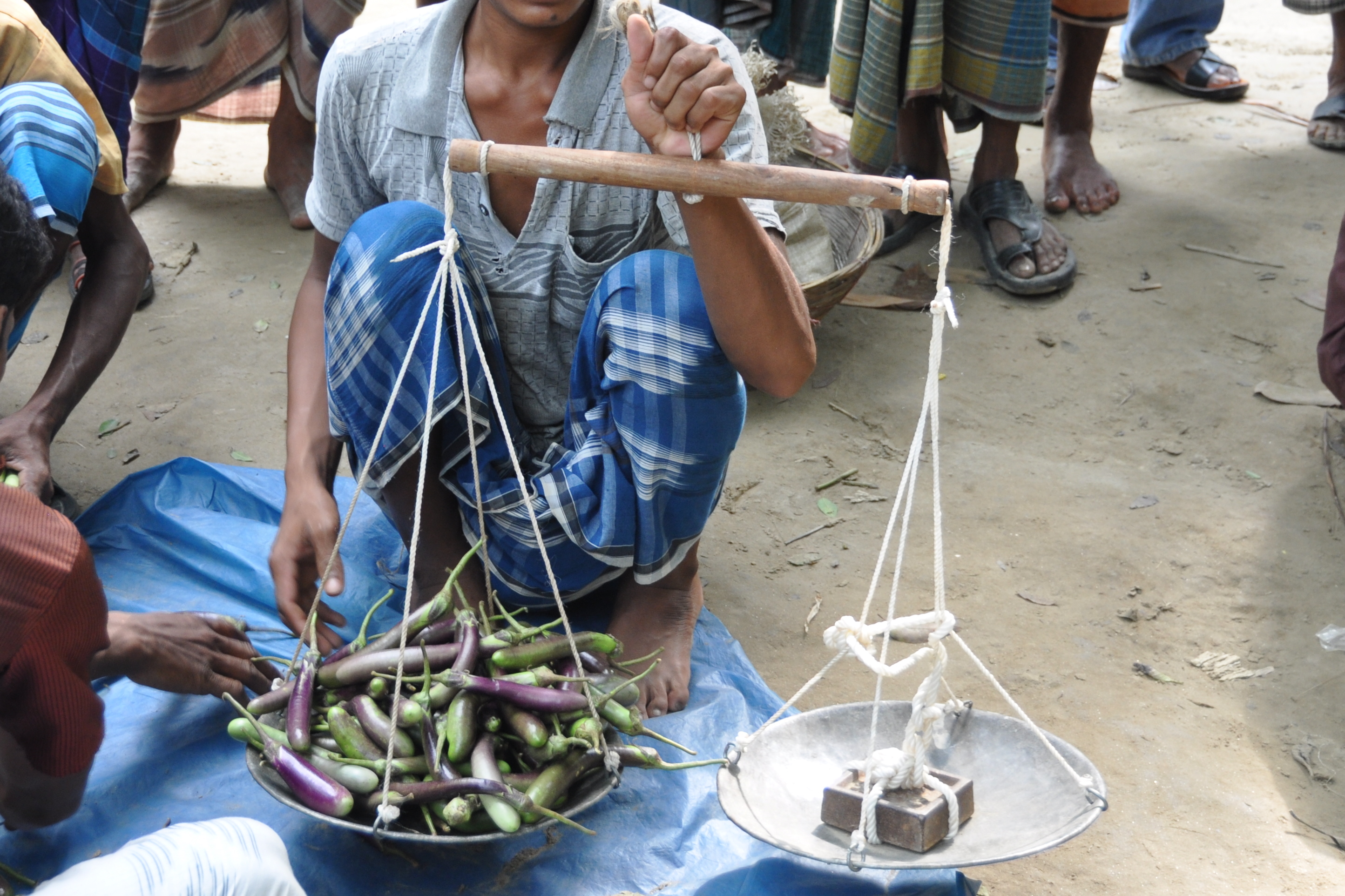
People who have travelled with me know that I am a sucker for markets.  I find it painful to drive past one and not stop.  We’re not talking about supermarkets, shopping centres, outlet malls and Walmarts.  We are certainly not talking about vending machines – product dispensers without human interaction.  Flea markets and garage sales might count, but the ones I find the most fascinating are the rural markets found in the countries in which IDE works; those places where food stuffs, grains, spices, cooking oil and kerosene, livestock, chickens, jewelry, clothing, essential hardware and local hooch change hands.

I can think of no place to learn more about what is going on locally:  what is being produced, what people are consuming, how much purchasing power exists, what is the quality of things available for sale, what local diets consist of, what tools people need, local modes of transportation, what is a commodity and what is a treasure, what people value and how much they will pay for it.   One learns a lot about the local gender dynamics – who’s doing the trading and who is making the decisions and who has the cash and who is shrewd.  In times of stress, desperate or vulnerable households sell livestock or jewelry or tools and productive assets.  This also happens in the marketplace, and astute observers can also spot these indicators of livelihoods under pressure.

Robust markets need both producers and consumers, and ideally, a lot of people who are both.  It is discouraging to smallholder farmers to bring their produce to market to find out that there are no customers for their products and/or that these customers are only prepared to pay low prices.  It is equally discouraging for consumers to come the market to find out that what they want isn’t there and/or that prices of the staples they need are higher than last week.  It is common to rue higher food prices, but surely higher prices are good for smallholder farmers.  More than that, pricing is a critical measure of what is going on, in particular, the balance between supply and demand, and the seasonality of tomatoes and the impact of local festival celebrations. 

For sure, markets are places of opportunity.  It is fine to grow food (for family consumption) or to sew clothing or manufacture some other product; it is only in the marketplace that one converts these to cash.  It is the marketplace which is the source of revenues which create other options – better health, education, housing and so on..  It is the marketplace in which the “sweat of one’s brow” converts to tangible value.  It is in the market place in which hopes convert to reality – rewards are best but sometimes there are disappointments. 

Some of our talk about markets is nonsense.  The notion of a creating sustainable market is probably in that category, unless one means that the space for producing and consuming will sustainably exist.  The reality is that the demand and prices for commodities is not constant; it is dependent on purchasing power and supply and other income sources and populations and seasonal factors.  The notion of “pro-poor markets” is probably oxymoronic, unless we mean that markets are places where the poor may finally realize the opportunity to get ahead by selling what they have produced.  For sure, market access for both producers and consumers is key.

Markets are dynamic community places; it is easy to see, and fun to observe, the breadth and pleasure of human interaction, the conversations and laughter and conviviality – neighbours visiting with neighbours – negotiations underway and deals being made, often rather quickly but sometimes more protracted and measured.  Markets are places where you find men, women and children, mostly all carrying something to the market in the morning, and carrying back something else late afternoon.  And at the end of the day, it is the human dynamic about markets which I find personally so energizing.   I am looking forward to my next stop.

Posted in IDE, Personal | Tagged | Leave a comment

Billboards and food security


It might be the closet sociologist in me, but I have always enjoyed billboards.  I figure that you can learn a lot about a society’s values by what people post on billboards.  I still remember Coca Cola billboards from thirty years back with only a logo and four words, “It’s the real thing”.  More recently, the City Bank billboard in Dhaka “Money never starts an idea.  It is always the idea with starts the money”.  Or the Airtel India ad “Go wherever.  Do whatever”.  Or the LG (Life’s Good) ad promoting their LCD TV as “The ultimate seduction.”  Or the Kenya ad promoting a well known whiskey with just two words, “Keep walking”.

Billboards are not always stationary.  The outer walls of buses and trucks make great rolling buses.  “India is great”.  “Horn please”.  “Is prosperity the will of God?”.  I liked the truck in South Dakota, “Delivering supply chain solutions to the food industry.”  Nobody has time to read a book on a billboard, whether rolling or not, so the phrases go to be short.

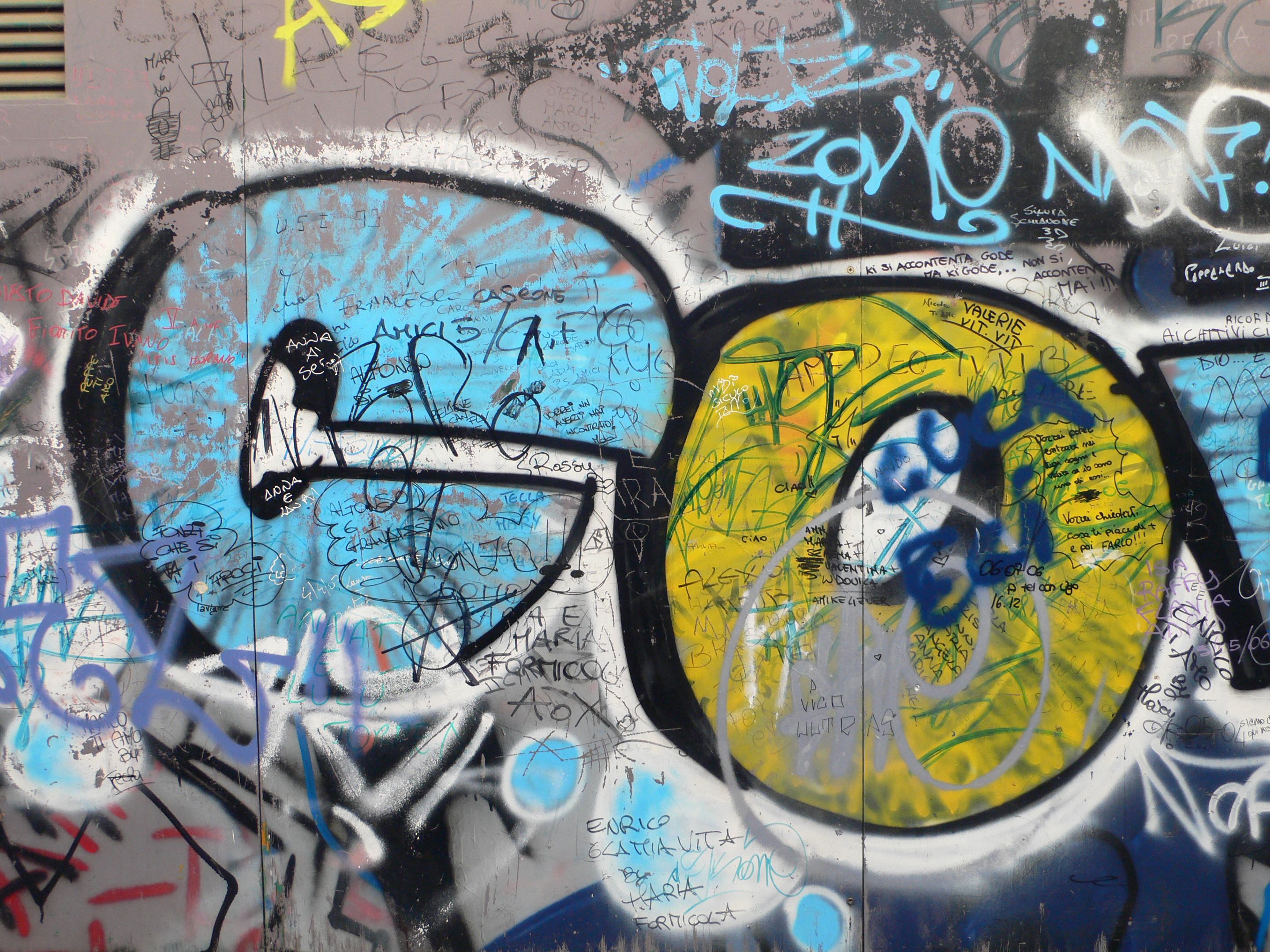
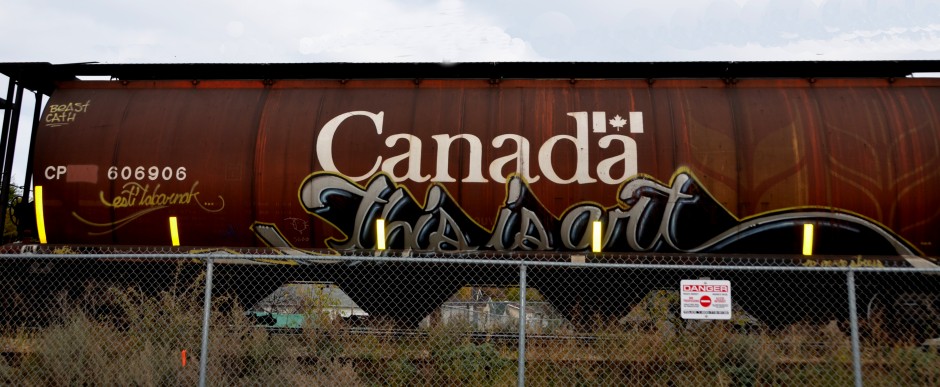
My interest in these writings on the wall has also morphed into a quite a collection of graffiti – sometimes defacing in net impact, sometimes amazingly artistic but mostly always, an expression of something.  Wish I read could these wall art expressions better. 

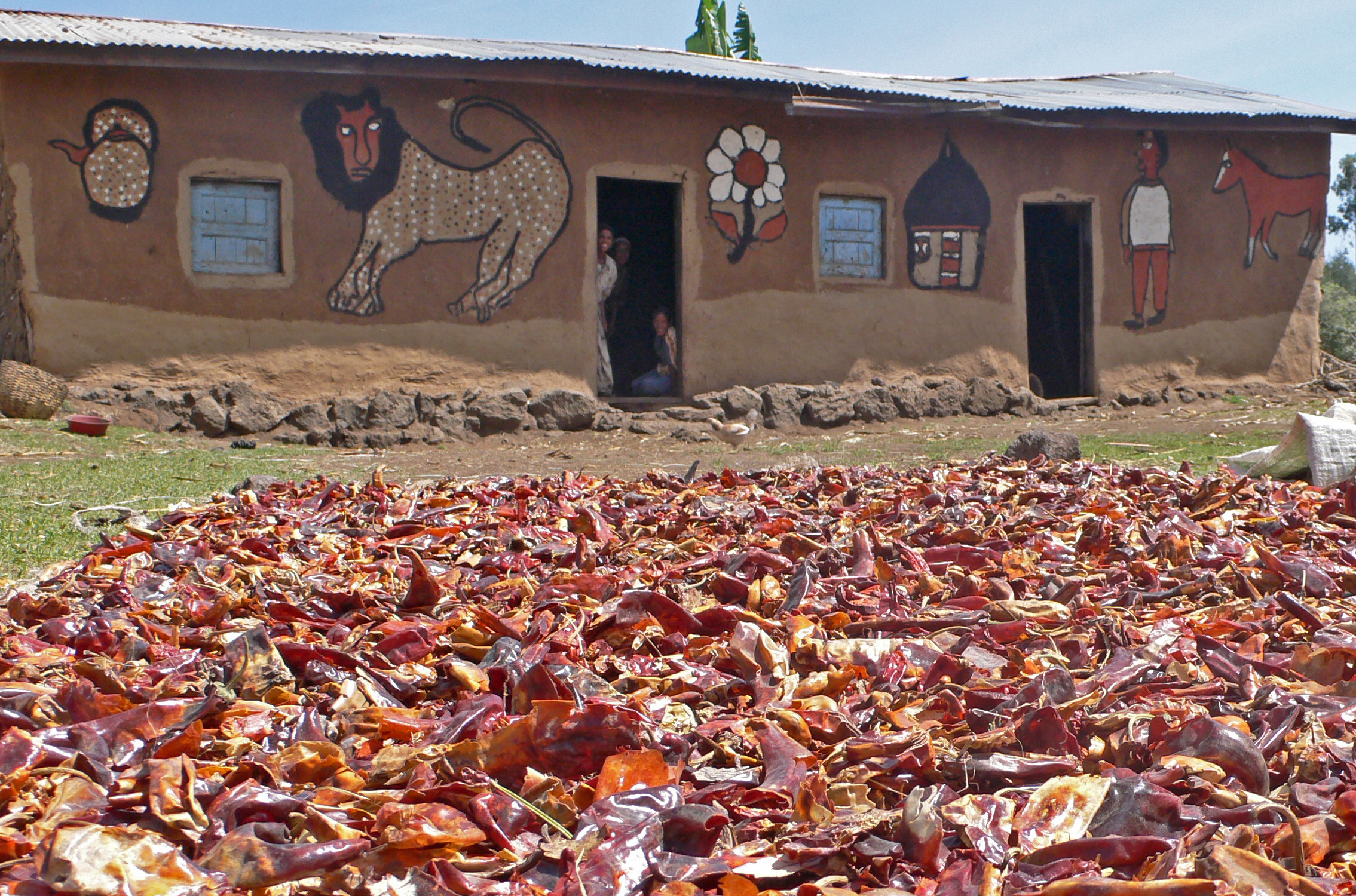
So whether I am on Facebook or roaming rural areas of Africa, I am always on the lookout for what the wall messages are.  Driving by a Ethiopian farmsite, I see a large area of red chili peppers drying for further processing, and on the house, some amazing folk art – a flower, the “lion of Judah”, a coffee pot, a horse and a covered house.  I am pretty sure that hungry people do not have time for art work on their houses, and to me it was a little indication that the occupants at least had the resources to adequately feed themselves.  Food secure, in other words.

When I am invited, I also like to visit the interiors of people’s homes because what they post internally also has clues of their aspirations, celebrations and values.  On a wall inside another Ethiopian home, extremely sparse in terms of possessions, utensils and furniture, the chalked words in Amharic (which I couldn’t read) and some in English which I could, “Without God and life” – almost certainly an expression of basic desires.

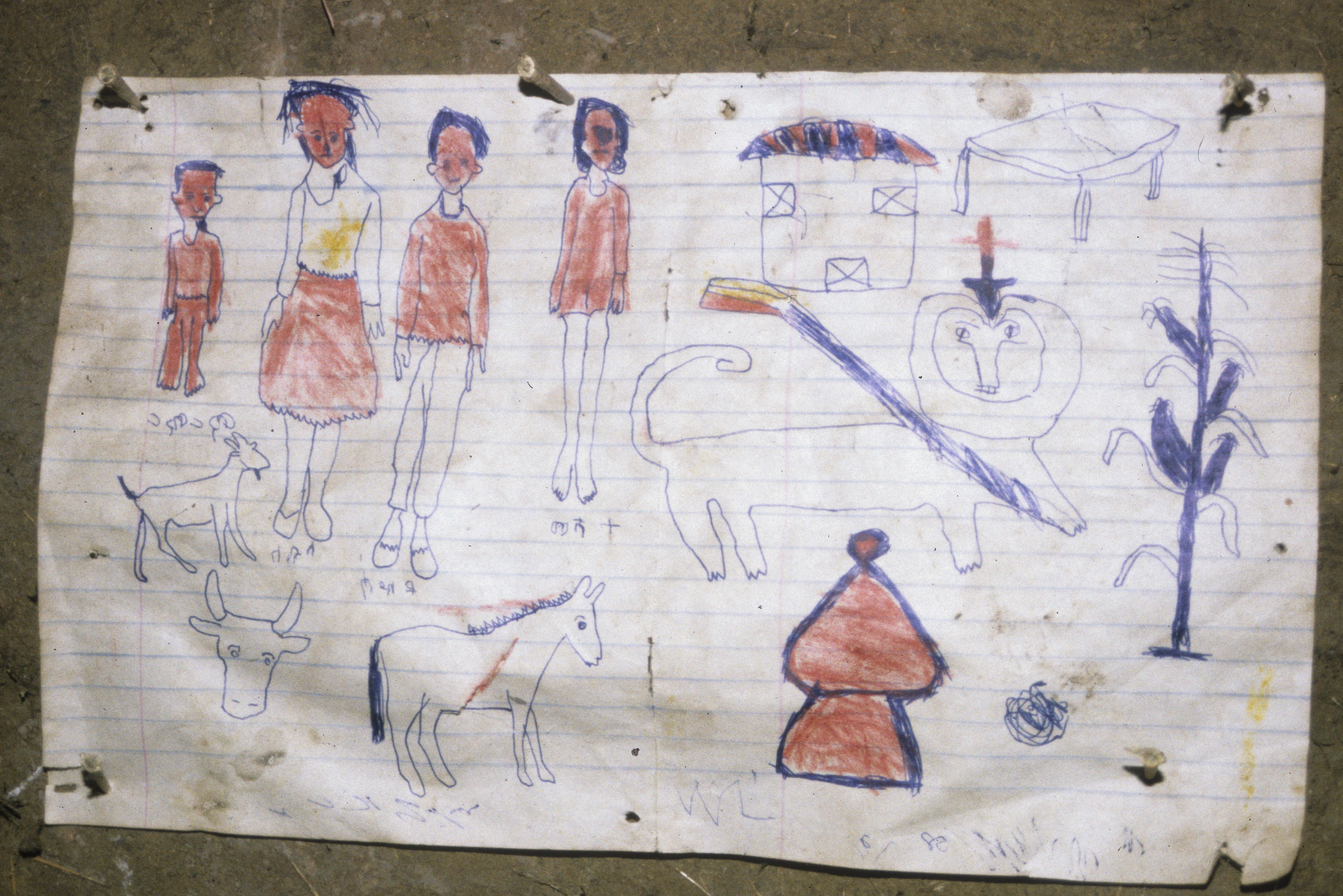
In another rural Ethiopian home, a larger drawing of a school child – partially colored in.  Family members dressed in a more modern style.  The “lion of Judah” as the symbol of faith.  A corn stalk with leaves and developing cobs, and carefully colored in, the important wicker basket with the characteristic lid designed to host the daily bread – the enjera.  Give us our daily bread.

So I see lots of stuff on billboards and on wall postings and on signboards and on rolling vehicles.  People are not one-dimensional in terms of their values and expressions and things to say.  Still, I am struck by how often, especially in less well to do communities, I see expressions of hope and desire to be food secure – to daily have the means to access the food we need to survive and prosper.  So it feels good to be working for IDE, an organization dedicated to providing income opportunities for the poor – income opportunities which provide access to the food desired and required.

Al Doerksen

August 2010.

Posted in IDE, Personal | Tagged , , | Leave a comment

The Iconic Treadle Pump

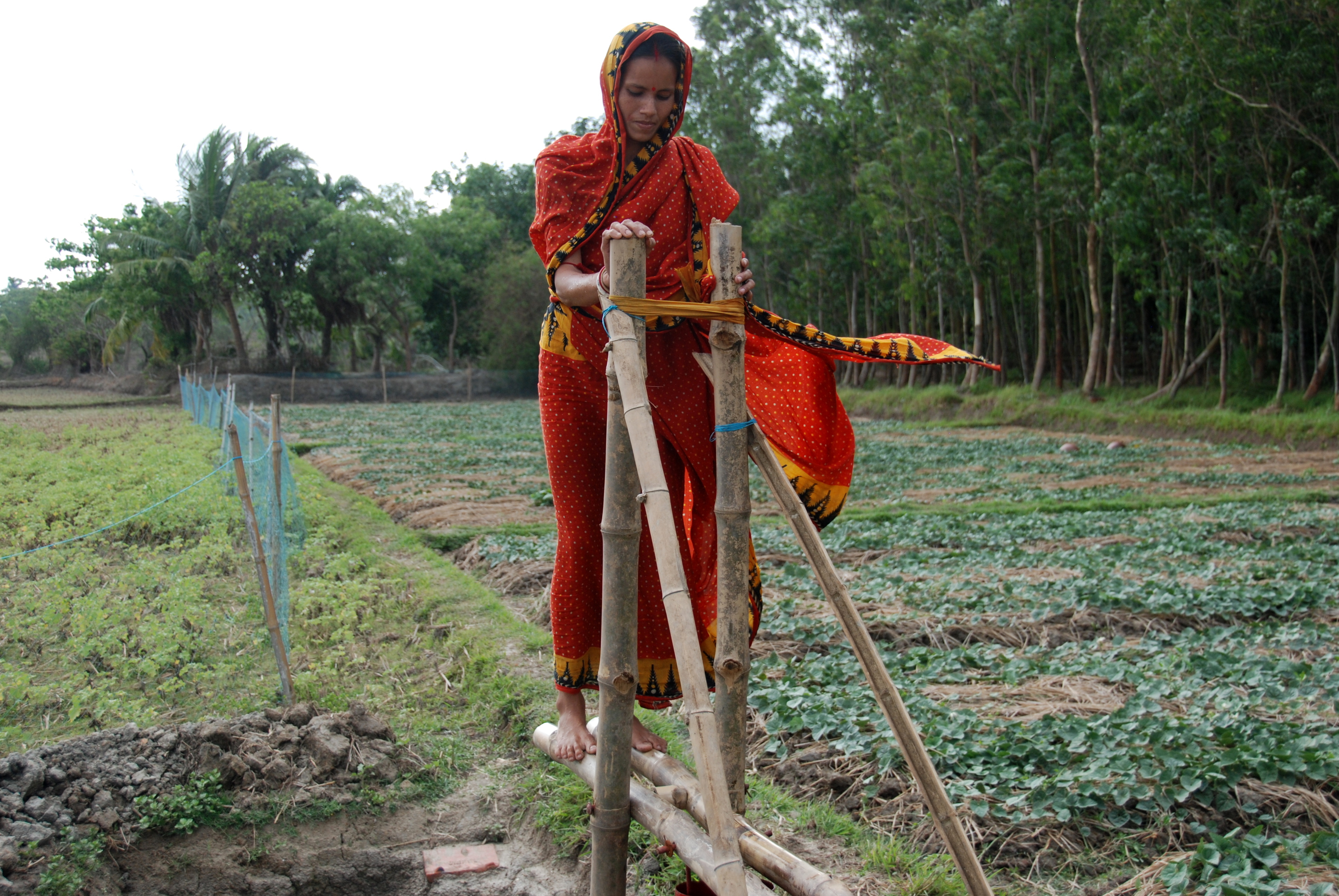
If IDE employees were forced, by policy, to wear a tattoo of IDE’s most successful technology, it would be a treadle pump.  No, we didn’t invent it.  It was introduced to us by Gunnar Barnes working for LWS in northern Bangladesh; more than a few people have claimed subsequently to be the inventors but at best, they have been people who have re-developed or refined or re-adapted the pump to a local circumstance. 

The icon

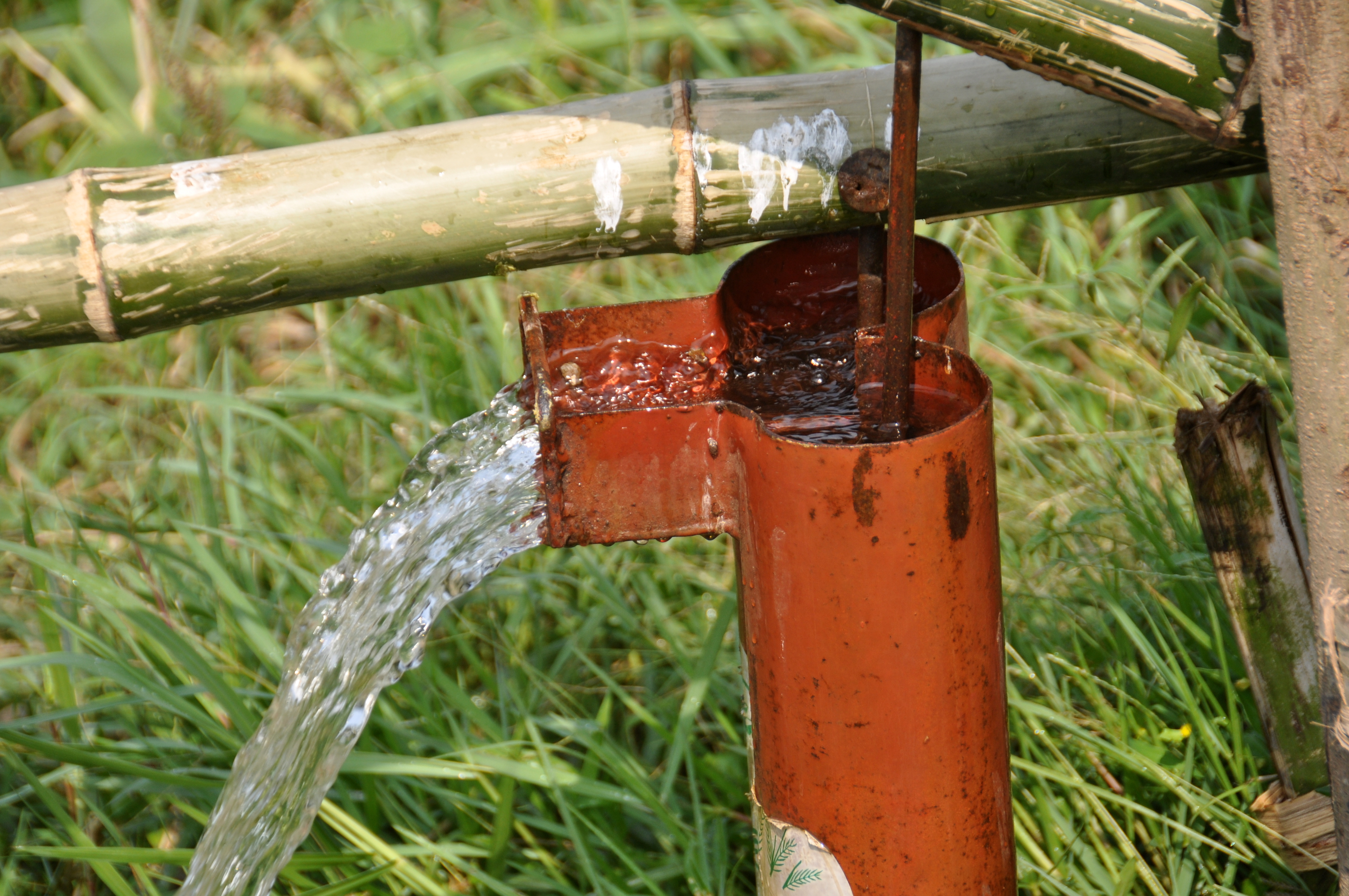
There are in fact lots of versions.  The  materials used for the pump and supports are some combination of metal and wood, often bamboo, sometimes plastic, and piston cups which might be leather, plastic or rubber.  We have even seen cement versions designed for installations where the soil is saline and corrosive.  But they all do the same thing; they lift irrigation water from depths up to 7 meters.

We estimate that around 2 million households in South Asia and Sub-Saharan Africa have purchased and used this handy little suction pump in the past 25 to 30 years.  IDE didn’t sell them all.  That wasn’t the point.  Our goal was to get them sold and working for farmers.  So we set up supply chains and encouraged the rise of competition and blessed the birth of new marketing organizations.

The magic of irrigation is that it boosts agriculturally productivity through better nourished crops, and through additional crops in dry seasons of the year.  The magic of this productivity means additional food for household consumption or for market distribution or both.  In India these days, many users are seeing their net income increase by over $600 annually!  The consequence of this is options:  the option to eat better and/or improve housing and/or educate children and/or acquire better health care and/or purchase additional farm assets.

Shakuntala, an iconic customer

Let’s be a little conservative.  Let’s assume that the annual income boost is only $300 per year, and that the pumps are used for a minimum of 3 years.  Do the math yourself to get the astonishing number of $1.8 billion in household income created over the years.  Not bad for a little machine which costs less than one hundred dollars.  We have been promoting the generation of “water streams”; in fact the real results have been “income streams.”

Still, our customers remind us that treadle pumping is hard work.  Not as hard as manually lifting & carrying water, but still hard work.  Both men and women use these pumps, and so do their children and their parents.  They will do the work because of the benefit which results, but still they ask about whether their might be other options?  Solar photovoltaic?   Diesel?  Electrical?   Solar thermal?  We are looking for the answer to that because poverty and food insecurity need to be efficiently and effectively banished!  We will find these new technologies.

Posted in IDE | 2 Comments

Carrying a green card

So here I am on the 4th of July in my fifth homeland. No, this might be overstating it – this is my 5th country of residence. Preceding this one were Mexico, India, Germany and Canada, whose passport I continue to carry. I have enjoyed all these countries, and must confess a certain loyalty to each of them. I love the cultural warmth of Mexico, the fine (engineering & other) quality of Germany, the incredible complexity & resilience of India, the sense of undefined uniqueness of Canada and the strong sense of self confidence of the US.
This new country sojourn is different. I am carrying a green card, a euphemism for being a landed immigrant. If/when I get the chance, I will become a citizen particularly given that this it is possible to retain my Canadian citizenship.
Still, I have never been a great (Canadian) nationalist. I have never joined a political party. I didn’t want to be that sectarian. I have never sewed the Canadian flag on my backpack nor pasted flag decals on my suitcases. It’s not that I am embarrassed, I think it is for me a preference to be a global citizen, loyal to all people and places everywhere. I wish that we could achieve a world in which crossing borders was, for all people, easier, and with a lesser need for visas.
I was back in Canada a couple of weeks ago, and it felt good. It also felt good crossing the border at Emerson to have the Homeland Security agent say “welcome back.” In a few months, we will again spend a portion of the winter at our condo in Zihuatanejo, and I look forward to “bienvenidos” at that border crossing. Maybe I could naturalize there too, and thus become a NAFTA citizen.

Posted in Personal | Leave a comment